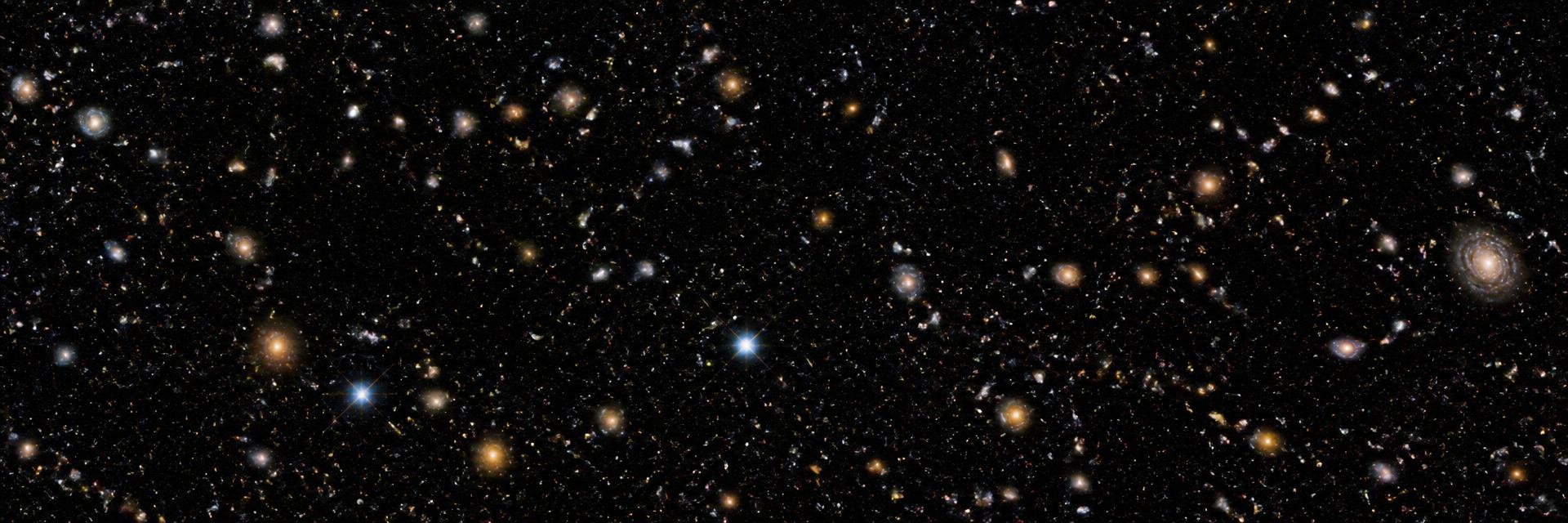
Hubble deep field view of thousands of galaxies

Warren's Observatory

Chapter 5

R U Standing Still Blog Posts

Essays and updates from Warren Roberts on motion, imagination, and our place in the cosmos.

Post #1 — July 12, 2026

How Fast Are You Traveling Through Space?

By Warren Roberts

Contemplating your place in the universe has been a mental pastime throughout history, but determining your physical location should be easy. Or is it?

With my engineering background and love for science fiction, I have spent most of my spare time researching all the major scientific fields of study. Upon retiring, I relocated to a somewhat isolated mountain cabin and spent the next five years writing my Hard Science Fiction Trilogy called Plasticity Island.

The main thrust of the story revolves around a rotating, two-mile-wide island in the middle of the Great Pacific Garbage Patch. As a side note: the island is built of large, hollow, plastic blocks that are 3D printed from the recycled debris in the ocean.

Back to the point: Try to imagine that you are floating on a rotating island in the middle of the Pacific Ocean at the equator. Then add in the rotation of the earth, the solar system, and the galaxy. Then send that galaxy flying through the universe toward the ever-expanding edges.

Where are you now? Which way are you facing and how fast are you moving?

Depending on the speed of the current at the edge of the gyre, the island could be rotating every two to three hours. If you are lying at the center of the island looking up at the stars, the rotation of the earth becomes more apparent, and the sun no longer rises and sets. Your visual horizon sinks and re-emerges into the visible distances of the universe.

This isn't an experiment for rocket scientists or astronauts. It's a thought experiment that almost anyone can enjoy. All it takes is a little imagination and a willingness to question something we rarely think about: what does it really mean to be standing still?

The Illusion of Stillness

Most of the time, we measure motion by how we feel against the ground beneath us. If you’re curled up in your favorite chair reading this, you probably feel completely still. Your coffee isn't sliding across the table, the walls aren't shaking, and there isn't a single hint that you're moving at all.

But that feeling is one of nature's cleverest illusions. It isn't reality.

Your chair is attached to the floor, the floor is part of your house, and your house is anchored to the Earth. Yet, the Earth is spinning on its axis while simultaneously racing around the Sun. Our entire solar system is orbiting the center of the Milky Way, and our galaxy is hurtling through space alongside countless other galaxies. Every single one of these movements is happening right now, whether you feel them or not.

As an engineer, I’ve always loved taking complex, heavy concepts and turning them into something visual. Numbers are great, but mental images are often much more powerful.

Think about standing on a massive carousel. If it turns slowly enough, you hardly notice. You could close your eyes and feel absolutely nothing. Now, imagine that carousel was a thousand miles wide. It could be spinning at hundreds of miles per hour, but because everything around you is moving in sync, you would still feel perfectly stationary.

That is exactly what life on Earth is like.

A Thousand Miles Per Hour, and We Don't Feel a Thing

Our planet completes a full rotation every single day. If you’re standing on the equator, you’re actually traveling at over a thousand miles per hour. If you live further north or south, you're moving a bit slower because you're tracing a smaller circle around the Earth's axis.

The reason we don't feel it is likely because our senses evolved to detect sudden jolts or changes in motion, not smooth, constant movement. It's like being on a commercial flight cruising at 550 miles per hour; you can sip your coffee without a worry because the entire cabin is moving with you. The same principle applies here, just on a much grander scale.

That realization is ultimately what inspired this website.

I wanted to create a space where anyone could discover exactly how fast they are traveling through the cosmos at this very moment. Instead of just reading a dry list of scientific facts, I wanted visitors to enter their location and see their own personal numbers. It makes astronomy feel personal.

Science becomes so much more captivating when it connects directly to our everyday lives.

Look Up

The universe has a beautiful way of making us feel both incredibly small and incredibly lucky at the same time.

Every person who has ever lived has shared this tiny, spinning marble. Every invention, every masterpiece, every scientific breakthrough, and every human tragedy has played out on a world that is quietly hurtling through the void. We rarely stop to appreciate just how wild that journey actually is.

I often wonder if our ancestors would be amazed—or perhaps disappointed—that we know so much about the cosmos yet spend so little time actually looking up. Modern life is a distraction. We rush from one thing to the next, eyes glued to phones, computers, and dashboards. Meanwhile, right above us, the greatest show in existence is playing out every single day and night.

Maybe that’s why I enjoy writing science fiction.

Good sci-fi isn't about predicting the future; it’s about fueling curiosity. It asks "What if?" and follows the science wherever it leads. Some of those ideas stay in the realm of fiction, but others eventually become the engineering projects of tomorrow.

History proves this all the time. Flying machines, submarines, satellites, and even handheld communicators all lived in the pages of stories long before engineers turned them into reality. Imagination has always been one of science's best partners.

If this site encourages someone to learn a bit of astronomy, revisit a physics lesson they once ignored, or simply step outside tonight to look at the stars, then I’ve done my job.

Over the next few months, I’ll be diving into the questions that have fascinated me for years. We’ll explore Earth’s rotation, our orbit around the Sun, the movement of our galaxy, and the staggering scale of the observable universe. I’ll also weave in some engineering stories, sci-fi concepts, and thought experiments to challenge the way we view our place in space.

You don’t need a physics degree to join me. All you need is curiosity.

So, before you move on, take one last look around.

The room is quiet.
The chair feels still.
Your coffee hasn't spilled.

And yet, at this very instant, you are traveling through space at speeds that would have seemed impossible just a few generations ago. You have been doing it every single second of your life.

And until today, you probably never even noticed.

Welcome aboard.

Post #2

Are You Really Standing Still?

By Warren Roberts

Let's look at the big picture!

Does this question refer to you:

  • Physically — You're traveling through space at incredible speeds.
  • Mentally — Are you still learning and growing?
  • Professionally — Is your career moving forward?
  • Financially — Is your money working for you?
  • Emotionally — Are you stuck in old habits?
  • Spiritually — Where are you on your life's journey?
  • Scientifically — Motion is always relative.

The common denominator in all these questions is CHANGE!

Everything in the universe (that we know of) is in a constant state of change. From the position of the Milky Way as it flies through the universe at 1.3 million miles per hour to the very atoms that make up every living cell in your body. From electrons in superposition to free neutron decay, everything is changing. Is the Earth's climate changing? Of course, it always has and always will. At least until the Earth gets blown away, that is. Change is the only constant!

Now that you have calculated your speed from the rotation of the Earth to the depths of space, I'm sure that you have realized that your location in this great universe is never in the same place twice. While that fact is fun to contemplate, it doesn't have the same impact on your everyday life as some of the other questions above. In this article, I'm just going to focus on the first item in the list: Physical Changes.

When most people think about physical change, they think about the obvious things.

  • You get older.
  • Your hair changes color.
  • Your muscles become stronger or weaker.
  • You gain or lose weight.
  • You heal from an injury.

These are all physical changes, but they are only the changes we can easily see. The human body is changing in thousands of ways that are completely invisible to us. Every breath changes the chemical composition of your blood. Every meal provides raw materials that may eventually become part of your cells. Your skin is constantly replacing itself. Your bones are continually being remodeled. Your heart beats, your lungs expand and contract, and your brain continuously adjusts its interpretation of the world around you.

Even when you believe you are completely motionless, you are more like a busy factory than a statue.

And then there is the strange relationship between your body and your brain.

Your brain does not actually experience motion in the same way a speedometer does. It doesn't have a little gauge that tells you, "You are currently traveling at 800 miles per hour because of Earth's rotation." Instead, your brain is constantly comparing signals from your eyes, inner ear, muscles, and joints.

This is why you can sit comfortably in a smooth-moving airplane traveling hundreds of miles per hour and feel as if you are sitting still. The air inside the airplane is moving with you. The seats, walls, floor, and everything else around you are moving together. Your brain sees no major change in your surroundings, so it concludes that you are stationary.

But if you suddenly look out the window and see the ground rushing past below, your perception changes instantly.

The same thing happens on a much smaller scale.

Have you ever been sitting in a parked car when the vehicle next to you begins to move? For a moment, you may think your own car is rolling backward. Your eyes see motion, but your inner ear says, "We are not moving." Your brain has to quickly determine which source of information is correct.

This is a fascinating reminder that your experience of motion is not a direct measurement of reality. It is an interpretation.

Your brain is constantly constructing a model of the world.

That model is usually very good.

But it is not perfect.

The experience of motion can even be affected by where you are located on Earth.

For example, your distance from Earth's axis of rotation changes with latitude. At the equator, you are traveling in a large circle around the Earth's axis. Near the poles, the circle becomes much smaller. At the North or South Pole, you can technically rotate in place while the Earth turns beneath you, but your distance from the axis is essentially zero.

The Earth is still rotating, but your personal speed caused by that rotation depends on your latitude.

Your altitude also changes things.

The higher you are above Earth's surface, the farther you are from the Earth's center. This slightly increases the distance you travel as the Earth rotates. The difference is small for someone standing on a mountain, but it becomes more significant for aircraft and spacecraft.

Even your weight changes slightly depending on where you are.

Gravity is not exactly the same everywhere on Earth. It varies with latitude, altitude, and local geological conditions. The Earth is not a perfect sphere, and its rotation also produces a small effect that makes your effective weight slightly different depending on where you stand.

You would not notice the difference by stepping from one city to another.

But sensitive scientific instruments can.

Two people can be standing on opposite sides of the planet, both feeling perfectly still, while they are moving through space at different speeds. Their bodies are being pulled by slightly different gravitational forces. Their clocks are affected by their altitude and motion by tiny amounts. They may even experience different environmental conditions because of latitude.

Yet both people would probably describe their current physical condition in exactly the same way:

"I'm standing here."

That statement is true.

And it is also incomplete.

You are standing relative to the ground beneath your feet. But relative to the center of the Earth, you are rotating. Relative to the Sun, you are orbiting. Relative to the center of the Milky Way, you are moving at an entirely different speed. And relative to the universe itself, the question becomes much more complicated.

There may be no universal place to stand still.

This brings us back to the original question.

Are you standing still?

Physically, the answer is no.

  • Your body is changing.
  • Your brain is changing.
  • Your location is changing.
  • Your relationship to the Earth is changing.

And even your perception of the world is constantly being updated as your brain processes new information.

You may be sitting in a chair reading this article, but you are not a stationary object. You are a living system in motion, riding on a rotating planet, orbiting a star, traveling through a galaxy, and changing internally with every passing second.

The interesting part is that you don't have to travel anywhere to begin the journey.

You are already moving.
You have been moving your entire life.

And the most remarkable part may be that your brain has become so good at making this constant motion feel normal that you rarely notice it at all.

Post #3

Are You Standing Still Mentally?

By Warren Roberts

Now that we have established that everyone is flying around in multiple orbits and numerous directions throughout the universe, let's look at an issue closer to home.

There are many times in everyone's life where we feel like we are stuck mentally. Sometimes we call it being in a rut, writer's block, brain strike, creative funk and many other names and it often comes down to a feeling of being lost. Where do we go next? How do we move forward?

And, of course, there are certain milestones in life that leave us feeling like we aren't taking full advantage of our mental capabilities. For me, the biggest one was right after I retired from a long arduous career, and I was no longer depended upon for making major decisions. Graduating from high school, college, losing a job, changing cities or countries; these are all changes in life that require us to stop and access our mental processes.

Retirement was particularly interesting for me because I had spent most of my working life solving problems. There was always a machine that needed to be repaired, a process that needed to be improved, a production problem that needed to be solved, or a decision that needed to be made. Then suddenly, the problems stopped arriving at my desk.

At least, the professional problems did.

The strange thing about reaching a major transition in life is that you may discover that your brain is still running at full speed, but it no longer has a clear direction. It is like having a powerful engine running in a vehicle that is sitting in the driveway. You have plenty of energy, but where do you go?

Standing still, mentally, is usually associated with the absence of learning. We've all heard the saying "never stop learning," and that is usually how we get out of a mental rut. Learning a new job, a new art, a new hobby, or just learning our way around a new town.

But learning does not always mean enrolling in a class or memorizing a textbook. It can be as simple as asking a new question. Why does something work the way it does? What would happen if I changed this? Could I build something? Could I write something? Could I learn how to use a tool that did not exist when I was younger?

Sometimes, the brain doesn't need a major life transformation. It simply needs something new to examine.

Often times, getting mentally stuck and feeling like you are standing still is a great opportunity to begin anew, move in a different direction, get creative and begin flying through the universe at nearly two million miles per hour again!

Here are some of the ways I like to break out of that rut or brain funk and expand my horizons.

Metacognition

Metacognition is simply the process of thinking about your own thinking. It sounds complicated, but most of us do it occasionally without realizing it.

Why am I thinking about this problem in the same way I always have? Why do I keep avoiding this decision? What assumptions am I making? Is there another way to look at this?

These questions can be surprisingly powerful. Sometimes we are not actually stuck because there is no way forward. We are stuck because we keep looking at the problem from the same direction.

As an engineer, I learned that when a machine repeatedly fails, continuing to make the same adjustment is usually not the best solution. Sometimes you have to step back and examine the entire process. Human thinking can work the same way.

Meditation

I am not suggesting that meditation will magically solve every problem in your life. However, quieting the constant stream of thoughts can give your brain something it rarely gets: a chance to stop reacting.

Most of us spend our days jumping from one thought to another. What needs to be done? What happened yesterday? What might happen tomorrow? What did someone say? What should I have said?

Meditation, even for a few minutes, can create a small space between one thought and the next. Sometimes that space is enough to recognize that the problem we were wrestling with is not as complicated as it seemed.

You don't have to sit cross-legged on a mountaintop to do this. Sitting quietly, focusing on your breathing, taking a slow walk, or simply observing your surroundings without constantly analyzing them can be a useful mental reset.

Creative Projects

One of the best ways I know to get the brain moving again is to create something that did not exist before.

It can be almost anything. Write a story. Draw a picture. Build a model. Repair an old machine. Learn to play an instrument. Design a website. Take photographs. Start a garden. Create a business idea that may or may not work.

The finished product is not always the important part. The process is.

When you create something, your brain has to make decisions. It has to solve problems. It has to imagine possibilities and deal with unexpected results. In other words, it has to move.

My own science fiction writing became one of the ways I continued moving mentally after retirement. I began with an idea, but ideas alone are easy. Turning an idea into a complete story required years of decisions, research, problem-solving, and imagination.

The project gave my brain somewhere to go.

A Change of Scenery

Sometimes the best way to change your thinking is to physically change what you are looking at.

There is a reason that many people feel better after spending time in nature. A forest, mountain, desert, lake, or ocean provides a different kind of information for the brain to process. The scenery changes. The sounds change. The pace of movement changes.

Even walking through an unfamiliar neighborhood can force your brain to pay attention in a different way. You notice new buildings, roads, plants, people, and sounds. Your mental map expands.

Personally, I prefer nature. There is something about standing on a mountain or looking across a large body of water that makes many of life's immediate problems seem smaller. Perhaps it is because the human brain is being reminded that the world is much larger than the room where we spend most of our time.

Artificial Intelligence

Artificial intelligence is another tool that can help get the mental gears turning. I see it less as a replacement for human thinking and more as a tool for expanding the number of ideas you can explore.

You can ask an AI system to explain a subject you don't understand, challenge your assumptions, help brainstorm a project, or suggest questions you never thought to ask.

The important thing is to remain an active participant in the process. Don't simply ask a machine to do all your thinking for you. Use it as a conversation partner, research assistant, brainstorming tool, or even an intellectual opponent.

Sometimes, all you need is something that will ask, "Have you considered looking at it this way?"

The most important thing I have learned about mental stagnation is that it is usually not permanent.

You may feel lost.

You may feel unmotivated.

You may feel as if you have already learned everything important or that your most productive years are behind you.

But the universe doesn't care about your age, your job title, or your previous accomplishments.

Everything is still moving.

Even individuals in their late 70s and 80s retain the ability to generate about 700 new cerebral neurons per day. You can always promote neurogenesis, plasticity and enhanced brain health by adhering to certain lifestyle choices.

Regardless of your age, your brain is still capable of forming new synaptic connections. New experiences can still change your perspective. New questions can still lead to new ideas. And sometimes the next direction in life does not appear until you take the first step in any direction at all.

So, are you standing still mentally?

Maybe.

But if you are asking yourself that question, you are already moving in the right direction! Don't Stop!